
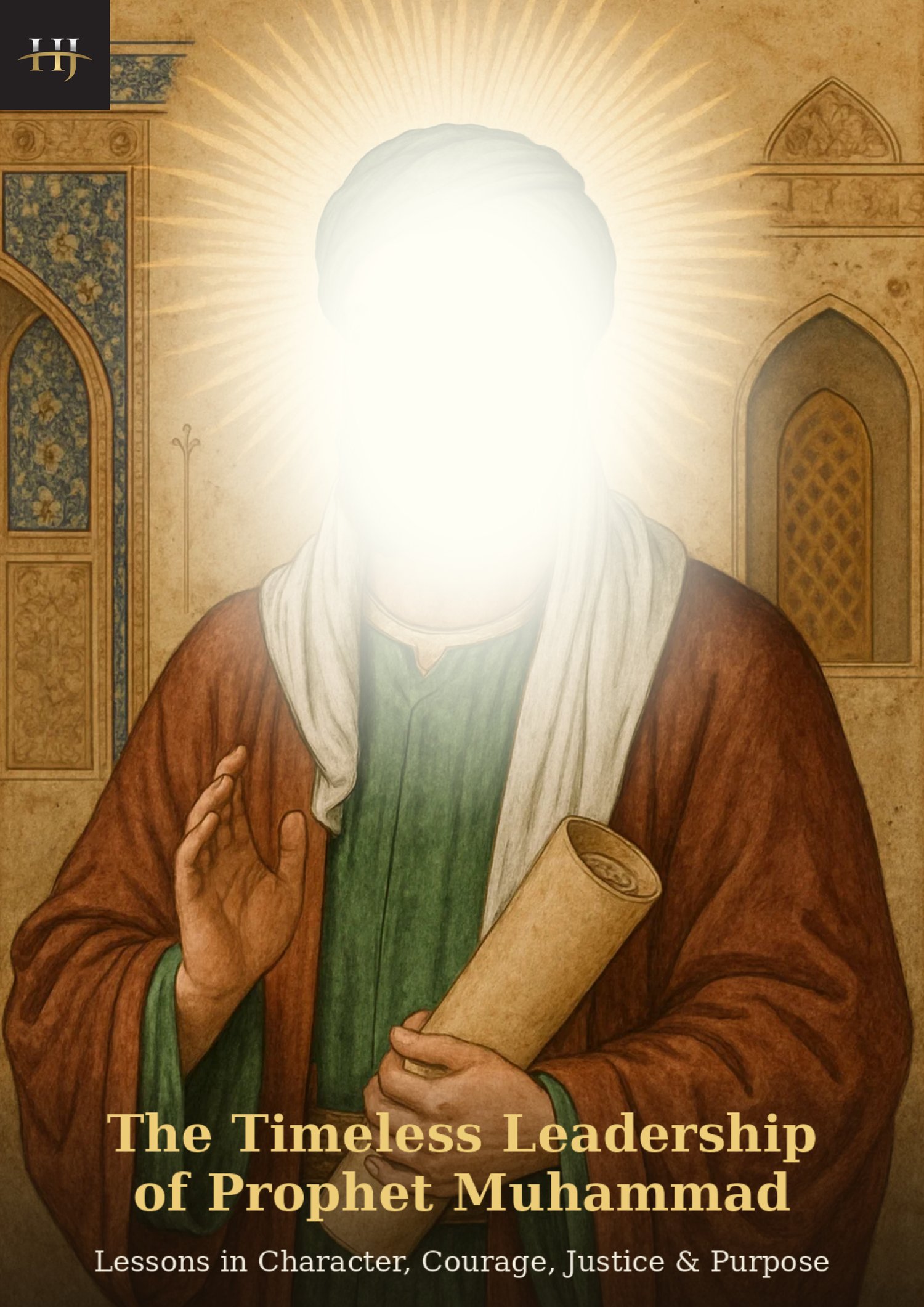
What makes a person a truly great leader?
Is it position? Power? Wealth? The number of people who follow them?
Or does true leadership begin with character, honesty, wisdom, courage, compassion, and responsibility?
When we reflect on the lives of the Prophets, peace be upon them, we discover that leadership was never simply about authority. It was about trust, purpose, responsibility, and service to Allah and humanity.
Among the greatest examples is Prophet Muhammad, whose leadership combined strength of character, wisdom, compassion, justice, courage, and extraordinary vision.
He did not simply gather followers.
He developed people, transformed communities, and built generations capable of carrying responsibility.
1. The Qualities of the Prophets: The Foundation of Leadership
When we reflect on the qualities of the Prophets, peace be upon them, we find some of the greatest principles of leadership.
Truthfulness
A true leader never builds influence through deception.
Trustworthiness
Authority is a trust. Responsibility is a trust. The rights of people are a trust.
Clear Communication
A leader must communicate a message clearly, honestly, and effectively.
Wisdom and Intelligence
Leadership requires the ability to think, understand circumstances, make sound judgments, and know when to act.
Patience
Every meaningful mission faces obstacles. A leader who gives up at the first difficulty cannot carry a great responsibility.
Courage
To stand for what is right, accept responsibility, and face difficulty even when the path is challenging.
Mercy
True strength does not require cruelty. Compassion gives leadership its humanity.
These qualities are not merely historical ideals. They are principles that every leader can strive to develop.
2. Character Before Authority
Before Prophet Muhammad led a community, he was known among his people as Al-Amin The Trustworthy.
This reveals one of the greatest principles of leadership:
Trust comes before authority.
A position may give you the power to make decisions, but your character determines whether people truly believe in you.
A true leader:
- Tells the truth when honesty is difficult.
- Protects trust when nobody is watching.
- Remains humble after success.
- Accepts responsibility for mistakes.
- Never uses authority simply to benefit himself.
Build your character before you build your power.
3. Create Leaders Everywhere
One of the greatest lessons from the Prophetic model is that leadership is not reserved for one person or one class of people.
Through the Prophet, Ahl al-Bayt, his Companions, men and women, and people from different backgrounds and social positions were developed through knowledge, faith, courage, wisdom, and responsibility.
Many became extraordinary examples of leadership in knowledge, governance, justice, military strategy, scholarship, community building, and service.
And the lesson extends beyond them:
Ordinary people can become extraordinary leaders when they are given knowledge, opportunity, responsibility, and the right values.
Do not simply build followers. Build leaders.
A great leader does not keep knowledge and responsibility for himself.
He teaches, empowers, trusts, and gives others opportunities to carry responsibility.
The greatest leader in your organization may be someone who simply has not yet been given the opportunity to lead.
4. Strength With Mercy
Prophet Muhammad demonstrated that strength and compassion can exist together.
His strength was not based on cruelty, and his mercy was not weakness.
This creates an important leadership principle:
Be strong in your principles and compassionate toward people.
A leader who knows only harshness creates fear.
A leader who knows only softness can create disorder.
A wise leader understands when to be firm and when to be merciful.
5. Purpose Before Personal Gain
The leadership of Prophet Muhammad was not driven by wealth, status, or personal glory.
It was driven by mission, purpose, and meaning.
This reveals one of the deepest principles of leadership:
People may work for money, but they sacrifice for a purpose they believe in.
A leader should therefore ask:
Why are we doing this?
What value are we trying to create?
What legacy do we want to leave behind?
6. Courage in Times of Crisis
Prophet Muhammad faced rejection, persecution, migration, conflict, uncertainty, and immense challenges.
Yet he remained steadfast in his mission.
The lesson:
A crisis does not create a leader. It reveals one.
When others lose control, people need a leader who provides stability.
When confusion spreads, they need clarity.
When hope disappears, they need someone who remembers the purpose.
7. Justice Above Personal Interest
There can be no great leadership without justice.
A just leader never allows:
Money, family connections, personal relationships, influence, or status
to become more important than what is right.
Authority is not permission to exploit others.
Authority is a trust and a responsibility.
A leader who uses his position for personal benefit may possess power, but he has lost the essence of leadership.
8. Leadership Begins With Service
One of the greatest transformations in the meaning of leadership is learning to ask:
Not only:
“What can I get from people?”
But:
“What can I give them?”
A leader who serves his team, develops his people, protects their rights, and seeks the greater good leaves a deeper legacy than someone who simply seeks influence.
True leadership is service before it is authority.
The Timeless Leadership Formula
- Truthfulness
- Trustworthiness
- Wisdom
- Patience
- Courage
- Mercy
- Justice
- Service
- Purpose
Technology changes, Economies change, Institutions change, Leadership styles evolve.
But human beings will always need leaders they can trust, respect, and believe in.
The Greatest Lesson
Leadership is not measured by the number of people you can control.
It is not measured by the size of your position.
It is not measured by your wealth.
True leadership is measured by the number of people who become better because of you.
So do not ask:
“How can I become more powerful?”
Ask:
“How can I become worthy of the responsibility Allah has entrusted to me?”
A great leader does not leave behind a position alone.
Not wealth alone.
Not a name alone.
They leave behind better people, better ideas, stronger communities, and a legacy that continues after them.
And this is one of the profound lessons of Prophetic leadership: